Above Ground Pool Plumbing Parts Explained: Valves, Unions, and Fittings Guide
, by iFJF Direct, 3 min reading time
, by iFJF Direct, 3 min reading time

Guide to above-ground pool plumbing parts: plunger valves, multiport valves, check valves, and pipe holders. Learn how each component works and when to replace them.
Above-ground pool plumbing may look simple -- a few hoses running between the pool and the pump -- but there are specialized components that keep everything working. When one fails, the entire system can lose prime, leak, or stop circulating. Understanding what each part does helps you diagnose problems faster and order the right replacement.
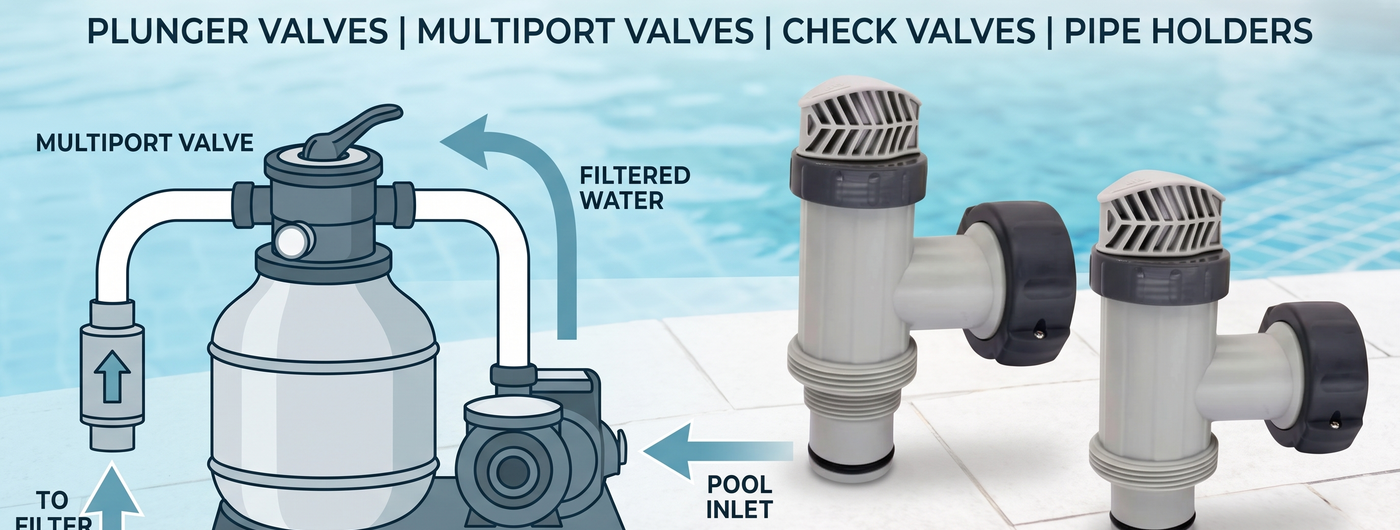
Plunger valves are the gatekeepers of your pool plumbing. Installed between the pool wall and pump hoses, they allow you to stop water flow to clean the filter, replace a hose, or service the pump without draining the pool.
If your pool uses a sand filter with a top-mount or side-mount valve, you have a multiport valve. These 6-way valves control water routing for filtration, backwashing, rinsing, waste discharge, recirculation, and closing.
Check valves allow water to flow in only one direction. They prevent pool water from siphoning back through the pump, protect heaters and salt chlorine generators from backflow, and maintain prime in above-ground installations. A failing check valve makes a flapping noise, and you may notice water draining back through the skimmer when the pump shuts off.
These often-overlooked parts prevent the single most common cause of hose failure: kinking and sagging. When a pool hose sags, it creates a low point where debris collects and restricts flow. Install pipe holders every 3-4 feet along the pool frame to keep hoses elevated and straight.
Plunger Valve Assembly -- Compatible with Intex and most above-ground setups. Shop Now
2" HiFlow Top Valve Assembly -- Complete multiport valve replacement. Shop Now
1-1/2" to 2" Check Valve -- Straight-flow design. Shop Now
The most common symptom is water leaking out of the waste line when the valve is in the Filter position. Replace the spider gasket if you see this.
On most Intex-compatible valves, the stem is permanently sealed and cannot be replaced separately. You need the entire plunger valve assembly. It takes about 10 minutes and requires only a screwdriver.
Yes. Hoses on the ground are exposed to lawn equipment damage, UV degradation, and create flow-restricting low points. Elevated hoses with pipe holders last longer and maintain better flow.