
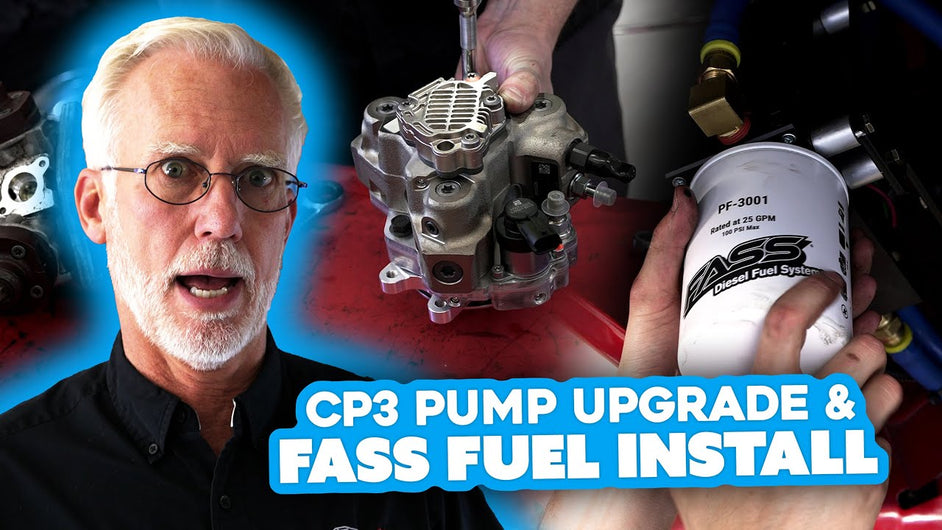
Preventative Upgrades: Replacing CP4 with CP3 Pump & Fass Fuel System
, by iFJF Direct, 8 min reading time
, by iFJF Direct, 8 min reading time

Why Upgrade Your Duramax CP4 to CP3? The Preventative Fix That Saves Thousands If you own a 2011-2016 Duramax LML, you've probably heard the horror stories about the CP4 injection pump. When these pum...
If you own a 2011-2016 Duramax LML, you've probably heard the horror stories about the CP4 injection pump. When these pumps fail—and they're notorious for it—they don't just stop working. They grenade inside your fuel system, sending metal debris through your injectors, fuel lines, and rails. The result? A repair bill that can easily hit $10,000-$15,000.
In this guide, we'll walk through a complete CP4 to CP3 conversion on an LML Duramax, including the installation of a FASS fuel system. This isn't theoretical—this is real shop footage from a two-day job on a customer truck that drove all the way from San Diego to Utah for this exact upgrade.
The CP4 pump uses two pistons (cylinder heads) on a crankshaft to build pressure. When it fails, it tends to self-destruct spectacularly. The CP3, by contrast, uses three pistons arranged around a central crankshaft. This design is significantly more durable and reliable—and here's the key difference: when a CP3 does eventually wear out, it typically doesn't take your entire fuel system with it.
| Feature | CP4 Pump | CP3 Pump |
|---|---|---|
| Number of Pistons | 2 | 3 |
| Reliability Reputation | Prone to catastrophic failure | Durable, proven design |
| Failure Mode | Destroys injectors, lines, rails | Typically fails without system damage |
| Repair Cost if Pump Fails | $10,000-$15,000+ (full system) | $1,500-$3,000 (pump only) |
| Item | Notes |
|---|---|
| CP3 Conversion Kit (Fleece) | Includes pump, adapter plate, O-ring, hardware |
| FASS Fuel System | Fuel filtration and lift pump setup |
| GM Regulator Components | Return assembly, feed line, regulators (GM parts) |
| Socket Set | Standard metric sizes |
| Fuel Line Caps | Critical for keeping debris out of open rails |
| Torque Wrench | For proper fastener tightening |
| Scan Tool | For verifying fuel pressure after install |
Before tearing into any truck, do a thorough inspection. On this 84,000-mile LML, we checked:
This is also the time to steam clean the engine bay. You'll be opening fuel lines—a clean workspace prevents contamination.
The CP4 sits on the driver's side of the engine, near the front. Removal involves:
Pro Tip: Keep a stock of different-sized caps for fuel rail ports. As clean as your workspace is, you don't want debris in an open rail. Dirt and diesel don't mix—it's the fastest way to turn a straightforward job into a nightmare.
The Fleece CP3 conversion kit includes everything you need:
The adapter plate allows the CP3 to bolt into the CP4's location. Make sure the O-ring seats properly—you don't want any vacuum leaks here. The kit is well-engineered and comes complete; no need to source additional parts for the pump swap itself.
The FASS system adds filtration and a lift pump, which further protects your injection system. Here are the key installation tips:
This is where many shops get burned. Fleece recommends replacing specific GM regulator components as insurance:
These are all GM parts—no exotic aftermarket pieces. If you skip this step and get surging later, you'll be chasing your tail. Surging feels like a mild vibration at highway speeds, almost like the pump is hiccuping or losing power momentarily.
On this particular truck, we had an issue after initial assembly. The engine ran but something wasn't right. Here's the lesson: when something's off, check your own work first. Don't reach for the scanner—look over your connections.
In our case, two regulator connectors had been swapped. The connector for the pump and the connector for the rail regulator are similar and easy to mix up. It took 4 minutes to find and fix. The truck ran perfectly after that.
Rule of thumb: Every move you make is money. Four minutes of checking your work beats four hours of chasing codes.
Before calling the job done, hook up a scan tool and verify:
After a complete fuel system rebuild, don't just hand the keys back. Put 50-100 miles on the truck. Our shop has technicians drive customer vehicles home for a couple nights after major work. This catches any issues before the customer drives away.
Remember: Condition, Cause, Correction, Confirm. The confirm step matters.
| Tip | Why It Matters |
|---|---|
| Cap every open fuel line immediately | Debris in a rail = debris in injectors = expensive failure |
| Mock up FASS hoses loose before tightening | Prevents kinks and rubbing that cause leaks or failures down the road |
| Shim FASS pressure to 5 PSI for CP3 | Higher pressure can cause surging at highway speeds |
| Replace regulator components as insurance | These GM parts are cheap insurance against post-install issues |
| Test drive 50-100 miles before delivery | Catches problems before the customer is stranded |
| Brand | Component | Notes |
|---|---|---|
| Fleece Performance | CP3 Conversion Kit (LML) | Complete kit with pump, adapter, hardware |
| FASS | Fuel Air Separation System | Adds filtration and lift pump |
| GM | Regulator Assembly, Feed Line | Recommended replacement parts with conversion |

If you're doing a CP3 conversion, now's the time to upgrade your fuel filter setup. This Fuel Filter Head Assembly for 2005-2013 Duramax (LLY LBZ LMM) includes a hand fuel pump housing with heating sheet and aluminum air bleeder screw. Proper fuel filtration is critical when upgrading your injection pump.
Pair this with your FASS system and CP3 conversion for complete fuel system protection—clean fuel extends the life of your new pump and injectors.
Shop Now →Plan for two full days. This includes pump removal, conversion kit installation, FASS fuel system setup, regulator component replacement, and proper testing. Rushing this job leads to problems.
If your truck is still under warranty, any major fuel system modification will likely affect warranty coverage for fuel-related components. Check with your dealer. For trucks out of warranty, the CP3 conversion is a smart reliability upgrade.
You may experience fuel surging—a vibration-like feeling at highway speeds where the pump seems to hesitate or lose power. The regulator replacement is cheap insurance against this frustrating problem.
You can, but you're gambling. CP4 pumps are known for catastrophic failure. If you're hearing unusual noises from the pump area or noticing performance issues, don't wait—address it before the pump grenades and takes out your entire fuel system.
For a daily driver that you plan to keep, absolutely. The cost of the conversion (roughly $2,000-$3,500 parts and labor) is far less than the $10,000+ repair bill if a CP4 fails catastrophically. Think of it as insurance for your fuel system.