
6.7L Powerstroke Oil Change Guide: FL2051S Filter, Oil Capacity and Torque Specs
, by iFJF Direct, 9 min reading time
, by iFJF Direct, 9 min reading time

Complete 2011-2022 Ford 6.7L Powerstroke oil change guide. FL2051S filter specs, BC3Z-6731-B cross-reference, 13-quart oil capacity, torque specs, drain plug size, and step-by-step DIY instructions.
The 6.7L Powerstroke holds 13 quarts of oil. That's not a typo — thirteen. And if you've ever stood at the parts counter holding a receipt for a dealership oil change, you know why doing it yourself matters. What Ford charges for this job could buy you a case of Rotella T6 and a steak dinner with change left over.
This guide covers everything you need to change the oil on a 2011-2022 6.7L Powerstroke: the right filter, the right oil, torque specs, drain plug size, and the small things that trip people up — like that dipstick that lies to you and the filter cap o-ring everybody forgets.
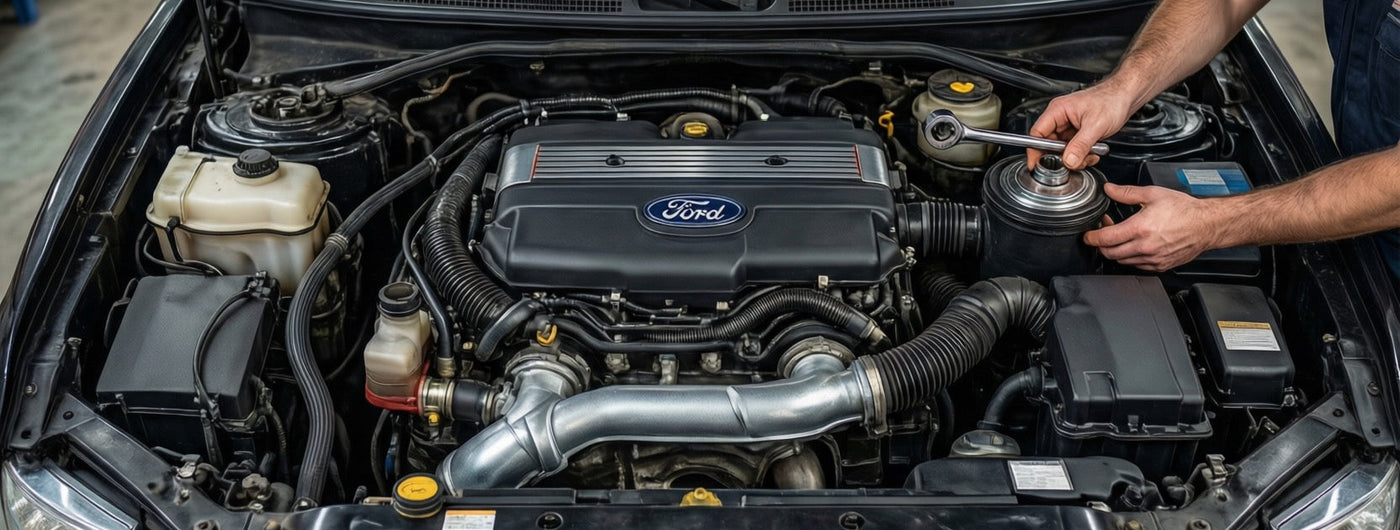
The FL2051S oil filter is a cartridge-style filter, not a spin-on can. It lives inside a plastic housing on top of the engine, driver side, right behind the alternator. Pop the hood, look down, and you'll see the 24mm hex cap staring up at you. That's your filter housing.
This cartridge replaces Ford part number BC3Z-6731-B and fits every 6.7L Scorpion engine from 2011 through 2020 (and works fine on 2021-2022 trucks with the updated steel piston engine too). The same filter, same housing, same procedure across the whole generation.
The filter media in a quality FL2051S is a synthetic-blend with high dirt-holding capacity. Cheap cartridges use paper media that swells and collapses under sustained heat. The 6.7's oil temps hit 220°F during a hard pull with a trailer. That paper filter disintegrates. The synthetic-blend doesn't.
One thing the parts store won't tell you: the FD4615 fuel filter + FL2051S combo kit costs less than buying both separately. The 6.7 needs both filters changed on the same schedule anyway — 7,500 miles or every other oil change, depending on how hard you work the truck.
Start the truck and let it idle for 5 minutes, or take a quick drive around the block. Warm oil drains faster and carries more contaminants out with it. Don't get it hot enough to burn yourself — 100-120°F is perfect.
The drain plug is on the bottom of the oil pan, passenger side. 16mm socket. Position your drain pan so the stream hits the center — 13 quarts moves fast and splashes far.
Pull the plug and let it drain. This takes a solid 10 minutes. Go grab a coffee. When it's down to a slow drip, replace the crush washer and reinstall the plug. Torque to 20 ft-lbs. More than that and you're buying a new oil pan.
Pop the hood. The filter housing is on top of the engine, driver side. You'll see a black plastic cap with a 24mm hex molded into the top. Use a 24mm socket or the dedicated filter wrench. Crack it loose, then spin it off by hand.
As you lift the cap out, the old cartridge will come up with it — it clips onto the stem in the center of the cap. Pull the old cartridge off the stem. It'll be heavy with oil, so have a rag ready.
This is the step that gets skipped and causes leaks. There are two o-rings on the filter cap assembly:
Both come in the box with a new FL2051S. Pull the old ones off with a pick or small flathead. Don't cut them with a razor — one nick in the cap groove and it'll leak forever. Lube the new o-rings with clean oil before installing. Dry rubber binds and tears during installation.
Snap the new FL2051S cartridge onto the cap stem. It clicks into place. Lower the assembly into the housing, thread the cap on by hand until it seats, then torque to 18 ft-lbs (or about 216 in-lbs if your torque wrench does inch-pounds).
If you don't have a torque wrench, hand-tighten until the cap stops, then go another 1/2 turn. Do not crank it. The housing is plastic and the threads will strip.
Pour in 12 quarts to start. Start the engine and let it idle for 30 seconds — the oil filter housing needs to fill and the turbo feed line pressurizes. Shut it off, wait 2 minutes, then check the dipstick.
The 6.7 dipstick is the worst part of this job. The oil is so thin when warm that it smears up the stick, making the level impossible to read. Here's the trick: wipe the stick, reinsert it fully, pull it out slowly and hold it horizontal. Look at both sides. The lower reading is the real one. Add the 13th quart if needed.
| Specification | Value |
|---|---|
| Oil capacity (with filter) | 13 quarts (12.3 liters) |
| Recommended viscosity | 5W-40 full synthetic (all climates) |
| Alternative viscosity | 10W-30 (warm climate), 15W-40 (conventional, not recommended) |
| API rating | CK-4 or FA-4 (diesel rated — do not use gasoline SN/SP oil) |
| Filter type | Cartridge — FL2051S / BC3Z-6731-B |
| Filter cap socket | 24mm |
| Drain plug socket | 16mm |
| Fastener | Torque |
|---|---|
| Oil drain plug | 20 ft-lbs (27 Nm) |
| Oil filter cap | 18 ft-lbs / 216 in-lbs (25 Nm) |
Overfilling. "Thirteen quarts, right?" and you dump all 13 in without checking. The filter housing holds about half a quart, and if your drain wasn't complete, you've now got 14 quarts in a 13-quart system. Overfilled oil gets aerated by the crank, aerated oil doesn't lubricate, and you spin a bearing. Check the dipstick.
Reusing the old o-rings. The large cap o-ring gets heat-cycled flat. It loses its crush. If you don't replace it, the cap will weep oil down the side of the housing, and you'll assume it's a valve cover leak. Swap both o-rings every time.
Wrong oil. Gasoline-spec 5W-30 from the bulk drum at the quick-lube place doesn't have the anti-foaming, anti-wear, or soot-dispersant additives that a diesel needs. The 6.7's turbo spins at 150,000 RPM. The oil is the only thing between the shaft and the bearing. Use CK-4 diesel oil.
Stripping the filter cap. The "just snug it up" instinct with a 24mm socket and ratchet equals 40+ ft-lbs. The cap cracks at about 35. Use a torque wrench, or hand-tight plus half a turn.
Skipping the fuel filter. If you're doing oil, you're halfway to doing the fuel filters too. The FD-4615 fuel water separator lives right next to the oil filter and the secondary filter is on the driver side frame rail. Both need changing every 15,000 miles or every other oil change. We covered the full fuel system procedure in our 6.0L HFCM replacement guide — different engine, but the principles carry over to the 6.7's lift pump and filter setup.
1. Use a Fumoto valve on the drain plug. Once you install a quick-drain valve, oil changes become a 20-minute job — no socket, no crush washer, no mess. Open the valve, drain into a jug, close it, done. Worth every penny on a truck you're keeping long-term.
2. Write the date and mileage on the filter cap with a paint pen. The cap is right there every time you open the hood. You'll never wonder when the last change was.
3. Change the air filter at the same interval. The FA-1902 engine air filter has the same 7,500-mile severe-service interval on dusty roads. A clogged air filter makes the turbo work harder and pulls fine dust past the seals. If you're already wiping your hands on a rag, swap it.
4. Consider the 5-micron fuel filter upgrade. The stock fuel filtration on the 6.7 is 10 microns. That's fine for clean pump diesel. But if you fuel up at farm tanks or buy from questionable stations, the 5-micron fuel filter conversion kit catches the silt that passes through the stock setup and scores the CP4 pump. The CP4 is a $3,000 repair when it grenades. One bad tank and you'll wish you had the extra filtration.
Ford's official interval is 7,500 miles for severe service (towing, idling, dusty conditions) and 10,000 miles for highway driving. Most owners with modified or deleted trucks change at 5,000 miles. The 13-quart capacity gives you some margin, but oil is cheaper than a turbo.
You can, but you shouldn't. 15W-40 is conventional diesel oil. The 6.7's high-pressure fuel pump and turbocharger rely on synthetic oil's cold-flow properties and thermal stability. In cold weather, 15W-40 pours like honey and starves the top end for the first 10 seconds after startup. Ford recommends 5W-40 full synthetic. Use it.
The FL2051S is a direct replacement for the Motorcraft FL-2051S. Same dimensions, same filter media type, same bypass valve pressure. It crosses to Ford BC3Z-6731-B and BC3Q-6714-CA. Any quality cartridge meeting IATF 16949 standards works fine.
Three likely causes: the drain plug crush washer wasn't replaced (or was doubled up with the old one), the filter cap o-ring was reused instead of swapped, or the filter cap wasn't fully tightened. Check the cap first — it's the easiest fix and the most common leak point.
About 12.5 quarts. But you should never change oil without changing the filter. The old filter holds roughly half a quart of dirty oil full of soot and combustion byproducts. Pouring fresh oil through a dirty filter defeats the purpose.
More 6.7L maintenance: Shop All 6.7L Parts • Ram 6.7L Cummins Fuel Filter Guide • 6.0L Powerstroke HFCM Replacement Guide
 68229402AA Oil Filter for Ram 1500 3.0L EcoDiesel 2014-2019
$21.99
68229402AA Oil Filter for Ram 1500 3.0L EcoDiesel 2014-2019
$21.99
 3Pcs PF2129G 3.6L Oil Filter Cartridge PF2129 PF2129GF PF2130 92149006 for GMC Cadilla-c Chevrole-t Sports Utility Vehicle Truck LFX LY7 Engine
$49.99
3Pcs PF2129G 3.6L Oil Filter Cartridge PF2129 PF2129GF PF2130 92149006 for GMC Cadilla-c Chevrole-t Sports Utility Vehicle Truck LFX LY7 Engine
$49.99
 68235275AA Fuel + 68229402AA Oil Filter Combo for Ram EcoDiesel
$35.99
68235275AA Fuel + 68229402AA Oil Filter Combo for Ram EcoDiesel
$35.99
 FD4615 Fuel + FL2016 Oil Filter Combo for 2017-2019 Ford 6.7L Powerstroke
$69.99
FD4615 Fuel + FL2016 Oil Filter Combo for 2017-2019 Ford 6.7L Powerstroke
$69.99