
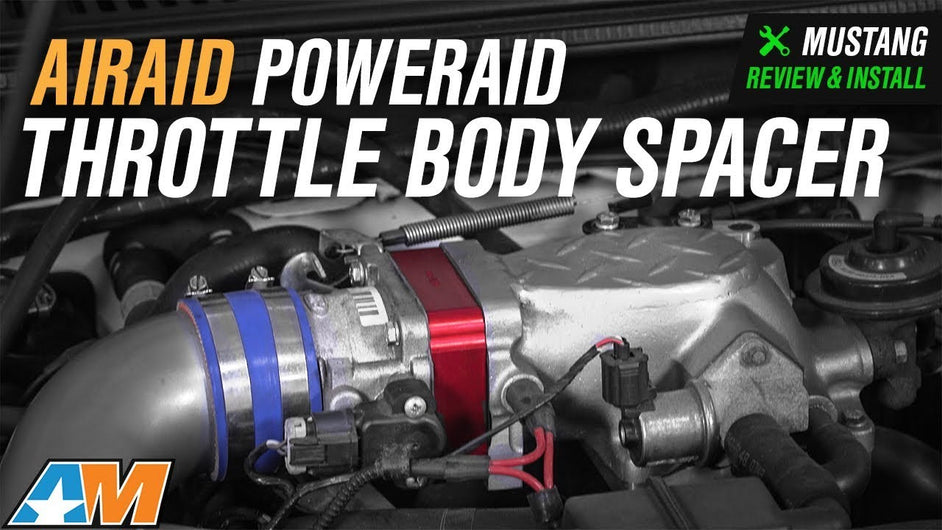
400-524 Throttle Body Spacer Review: 1999-2004 Mustang GT 4.6L & Crown Victoria — Does It Really Work?
, by iFJF Direct, 16 min reading time
, by iFJF Direct, 16 min reading time

Complete guide to the 400-524 throttle body spacer for 1999-2004 Mustang GT 4.6L V8 & 1996-2008 Crown Victoria. Real dyno results, installation walkthrough, video guides, and detailed competitor comparison. Does it work? Yes — here's the data.
If you own a 1999-2004 Mustang GT with the 4.6L 2V engine — or a Crown Victoria, Grand Marquis, or Town Car from the Panther platform — you've probably heard about throttle body spacers. They're one of the most talked-about bolt-on mods in the Ford community, and for good reason: they're affordable, easy to install, and claim to deliver real-world torque gains.
But do they actually work? We dug into dyno results, real customer reviews from Amazon, and installation walkthroughs — including real-world dyno testing and enthusiast feedback — to give you the definitive answer. Here's everything you need to know about the 400-524 Throttle Body Spacer, specifically designed for the 1999-2004 Mustang GT 4.6L V8 with the returnless fuel system, plus full compatibility with the 1996-2008 Crown Victoria, Mercury Grand Marquis, and Lincoln Town Car.
A throttle body spacer is a precision-machined aluminum plate that installs between your throttle body and intake manifold. It increases the plenum volume and — in the case of a helix/spiral bore design like the 400-524 — creates controlled air turbulence (vortex effect) that improves air/fuel mixture atomization as it enters the combustion chamber.
Think of it as adding a small, bolt-on intake plenum extension. The spacer itself adds roughly 1 inch of depth to your intake tract, which increases total intake volume and gives the incoming air charge a longer path — and more opportunity — to mix properly with fuel before ignition.
The billet aluminum spacer features a precision helix bore design — a threaded spiral pattern machined into the inner wall where air passes through. This creates a controlled vortex effect that improves air/fuel atomization before it reaches the combustion chamber.
This is the million-dollar question — and the short answer is yes, but with realistic expectations. Throttle body spacers won't transform your Mustang GT into a Terminator Cobra overnight. What they will do is improve throttle response, low-end to mid-range torque (800-3,000 RPM), and part-throttle drivability.
Here's what real-world data tells us:
Throttle body spacers are one of the most debated bolt-on mods in the Mustang community. Here's what the data actually says — no hype, no snake oil:
| Performance Claim | Reality (4.6L 2V EFI) | Myth Busted? |
|---|---|---|
| Peak Horsepower | Minimal (+1–3 HP, within dyno margin of error on stock engines) | ❌ Don't expect 15+ HP from a spacer alone |
| Low-End Torque & Throttle Response | Noticeable improvement — increased plenum volume optimizes intake velocity at low RPM. Throttle feels tighter off idle. | ✅ Legitimate — this is where the gains are |
| Intake Sound (Whistle) | Significant — the helix bore produces a distinctive induction whistle under acceleration, adding a classic muscle car intake note | ✅ Real effect — a favorite among sound-focused builders |
| Fuel Economy (MPG) | Marginal (+1–2 MPG highway cruising) — improved atomization enables slightly leaner cruise | ⚠️ Possible but don't buy it for MPG alone |
| Installation Difficulty | Beginner-friendly — 15–20 minutes, basic hand tools, no cutting or tuning required | ✅ True bolt-on — one of the easiest mods you can do |
Why are gains limited on the 4.6L 2V? The 4.6L Modular V8 uses multi-port electronic fuel injection (EFI) where fuel is injected directly into each cylinder's intake port — after the throttle body. Throttle body spacers produce their largest gains on older carbureted or throttle-body injection (TBI) systems where fuel and air mix upstream of the manifold. On EFI engines like the 4.6L, the primary benefits shift to throttle response, intake acoustics, and part-throttle drivability — still worthwhile, but not a horsepower miracle. Understanding this distinction is what separates an informed buyer from someone chasing unrealistic dyno numbers.
We analyzed all 88 reviews on the competing Amazon listing. Here's what real buyers report:
⚠️ Watch out for budget spacer issues: Multiple reviews mention "bolts too short" and one reviewer reported the spacer "melted from heat" — issues you avoid with a proper 6061-T6 billet aluminum spacer and included extended-grade hardware (both standard with the iFJF 400-524 kit).
The installation is straightforward enough that most DIY mechanics rate it beginner-friendly — about a 1 out of 3 on the DIY difficulty scale and 15–20 minutes with basic hand tools. Here's the complete walkthrough, specifically tailored to the 4.6L V8 engine bay:
Pro Tip: After installation, drive normally for 50–100 miles. The ECU will automatically re-learn fuel trims and adapt to the new intake characteristics. You'll notice the improved throttle response become more consistent as the computer dials in.
| Year | Make | Model | Engine | Fuel System |
|---|---|---|---|---|
| 1999-2004 | Ford | Mustang GT | 4.6L 2V SOHC V8 | Returnless |
| 1996-2008 | Ford | Crown Victoria | 4.6L 2V SOHC V8 | Includes P71 Police Interceptor |
| 1996-2008 | Mercury | Grand Marquis | 4.6L 2V SOHC V8 | — |
| 1996-2008 | Lincoln | Town Car | 4.6L 2V SOHC V8 | — |
Key compatibility note: This spacer is designed for the returnless fuel system found on 1999-2004 Mustang GT models. 1996-1998 Mustang GT models use a return-style fuel system — verify fitment before ordering. All 1996-2008 Panther platform vehicles (Crown Vic, Grand Marquis, Town Car) are compatible.
The iFJF 400-524 Throttle Body Spacer starts at $49.99 — but why would you choose it over budget Amazon alternatives that can be found for as low as $21? The answer is in the details:
| Feature | iFJF 400-524 | Budget Amazon Spacer |
|---|---|---|
| Material | CNC 6061-T6 Billet Aluminum | Cast aluminum (lower grade) |
| Heat Resistance | ✅ Won't warp or melt | ❌ Reports of melting under sustained heat |
| Hardware | Extended-grade bolts for full thread engagement | ❌ "Bolts too short" — multiple buyer complaints |
| Gaskets | Upper + lower included | Often single gasket only |
| Manufacturing | IATF 16949 Certified | Unknown |
| Finish | Anodized Red (corrosion-resistant) | Basic paint/powder coat |
| Shipping | US Warehouse — fast delivery | Often shipped from overseas (long wait) |
| Vehicle Coverage | Mustang GT + ALL Panther platform | Often Mustang-only |
Starting in 1999, Ford switched the Mustang GT's 4.6L V8 from a traditional return-style fuel system (with a fuel return line to the tank) to a returnless fuel system. This means there's a single fuel line running from the tank to the engine, and fuel pressure is regulated at the pump module rather than at the fuel rail.
Why does this matter for the throttle body spacer? The 400-524 is specifically engineered for the returnless system's intake geometry. If your Mustang GT is 1999-2004, you're good to go. For 1996-1998 models with the return-style system, verify fitment before ordering.
Q: How much horsepower will I gain?
A: Expect 3-8 HP and 5-10 lb-ft of torque at the wheels on an otherwise stock 4.6L 2V. Gains are more pronounced with supporting mods like a cold air intake and aftermarket exhaust. The biggest difference isn't peak numbers — it's the improved throttle response and mid-range torque where you actually drive.
Q: Will this void my warranty?
A: The Magnuson-Moss Warranty Act protects your right to use aftermarket parts. A throttle body spacer is a bolt-on component that doesn't alter emissions equipment or require tuning. Removal is just as easy as installation if ever needed.
Q: Do I need a custom tune after installation?
A: No. The factory ECU will automatically adjust short-term and long-term fuel trims. For best results, disconnect the negative battery terminal for 15 minutes after installation to reset learned adaptations, then drive normally for 50-100 miles.
Q: Will this fit my Crown Victoria Police Interceptor (P71)?
A: Yes — and this is one of the spacer's strongest selling points. The 400-524 is compatible with ALL 1996-2008 Crown Victoria variants, including P71 Police Interceptor, civilian LX, and Sport models. It also fits the Mercury Grand Marquis and Lincoln Town Car from the same years.
Q: What's the difference between a helix bore and a straight bore spacer?
A: A straight bore spacer simply increases plenum volume — more air, but no improvement in mixing. A helix/spiral bore spacer (like the 400-524) does both: it increases volume AND creates a vortex effect that spins the incoming air charge for better fuel atomization. This is why helix spacers consistently produce more usable torque gains than straight-bore designs.
Q: Will this spacer clear my strut tower brace or aftermarket hood?
A: The spacer adds approximately 1 inch of height. Most vehicles — including those with factory strut tower braces — clear without issue. If you have an aftermarket brace or cowl induction hood, measure the clearance between your throttle body and the brace/hood before installation.
For $49.99, the iFJF 400-524 Throttle Body Spacer delivers measurable improvements in throttle response, low-end torque, and driving enjoyment — all without requiring a tune, special tools, or more than an hour of your time. It's one of the few mods that genuinely qualifies as "cheap, easy, and effective" on the 4.6L 2V platform.
When you factor in the 6061-T6 billet construction (that won't melt like cheap cast spacers), proper extended-grade hardware (that won't leave you with bolts too short), full Panther platform compatibility (not just Mustang), and US warehouse shipping, it's the clear choice over budget Amazon alternatives — many of which cost nearly the same after factoring in missing gaskets, hardware upgrades, and international shipping delays.
Part of our Auto Tools & Equipment collection — browse all performance upgrades for your Ford.
400-524 Throttle Body Spacer — $49.99
CNC 6061-T6 Billet Aluminum | Helix Bore Design | Anodized Red | Ships from US
✅ 1999-2004 Mustang GT 4.6L V8 | ✅ 1996-2008 Crown Victoria (incl. P71) | ✅ Grand Marquis & Town Car
Shop Now →Includes upper + lower gaskets, extended-grade hardware, and installation guide
Disclaimer: Performance gains vary based on vehicle condition, supporting modifications, and driving habits. Dyno results cited are from third-party sources (independent third-party dyno testing) and represent typical gains for the 4.6L 2V platform. Always follow manufacturer torque specifications during installation.
 134001 Fuel Filter Housing Cap for 6.6L Duramax L5P 2017-2023 | iFJF
$69.99
134001 Fuel Filter Housing Cap for 6.6L Duramax L5P 2017-2023 | iFJF
$69.99
 12642623 Fuel Filter Head + 1R-0750 Refit for 2005-2016 Duramax 6.6L
$87.99
12642623 Fuel Filter Head + 1R-0750 Refit for 2005-2016 Duramax 6.6L
$87.99
 Edelbrock 1406 Performer 600 CFM 4-Barrel Carburetor — Electric Choke, for Chevy/GMC/Ford (Gold)
$419.99
Edelbrock 1406 Performer 600 CFM 4-Barrel Carburetor — Electric Choke, for Chevy/GMC/Ford (Gold)
$419.99
 1404 Performer 500 CFM 4-Barrel Carburetor Manual Choke NO EGR
$419.99
1404 Performer 500 CFM 4-Barrel Carburetor Manual Choke NO EGR
$419.99