


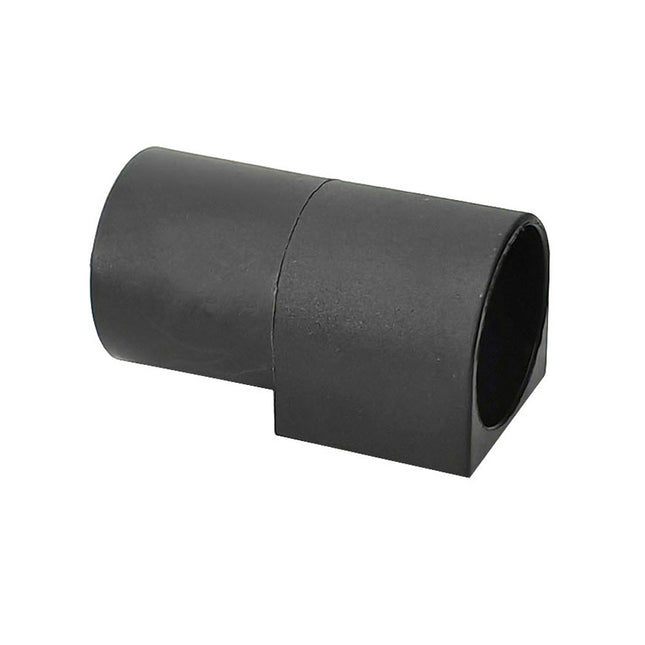


EGR Delete Kits & Block-Off Plates for Diesel & Gas Trucks
Exhaust Gas Recirculation (EGR) systems were introduced to reduce nitrogen oxide (NOx) emissions by recirculating a portion of exhaust gases back into the intake manifold. While effective for emissions control, EGR systems introduce several long-term problems for diesel and gas engines — carbon buildup in the intake tract, elevated intake air temperatures, reduced combustion efficiency, and accelerated oil contamination. For off-road, racing, and competition vehicles, deleting the EGR system is one of the most effective modifications you can make to improve engine reliability and performance.
At iFJF Direct, we supply complete EGR delete kits, block-off plates, and simulator modules engineered for the most popular truck and performance car platforms in North America. Our kits are manufactured from CNC-machined aluminum and 304 stainless steel with precision-fit gaskets to ensure a leak-free seal at every EGR port. Whether you are building a Duramax tow rig, a 5.9L Cummins track truck, or a Fox Body Mustang drag car, we have the EGR delete solution that fits your application.
Why EGR Delete Matters for Off-Road & Race Engines
EGR systems route hot, soot-laden exhaust gas back through your intake manifold. Over thousands of miles, this process coats your intake ports, valves, and intercooler with a thick layer of carbon sludge. The consequences are significant:
- Reduced airflow: Carbon deposits narrow intake passages, restricting airflow and robbing horsepower — particularly at wide-open throttle.
- Elevated intake temperatures: Recirculated exhaust gas can exceed 1,000°F before the EGR cooler. Even after cooling, charge air temperatures rise, reducing air density and oxygen content per combustion cycle.
- Oil contamination: Soot particles bypass piston rings and accumulate in engine oil, accelerating wear on bearings, camshafts, and turbocharger components. Oil analysis consistently shows elevated soot levels in engines running active EGR.
- EGR cooler failure: Cooler cores crack and leak coolant directly into the intake — a known failure point on 6.0L Powerstroke, 6.7L Cummins, and LML Duramax engines that can lead to hydrolock and catastrophic engine damage.
- Stuck EGR valves: Valve stems seize from carbon accumulation, causing drivability issues ranging from rough idle to limp mode activation and diagnostic trouble codes (P0401, P0403, P0404).
By deleting the EGR system and installing a block-off plate kit with an electronic simulator module, you eliminate every one of these failure points. The result is cooler intake temperatures, cleaner oil, more consistent combustion, and improved long-term durability for engines that operate in demanding environments where reliability is critical.
Common Symptoms of Failing EGR Systems
Before your EGR system causes serious damage, it typically produces warning signs. Knowing what to look for can save you thousands in repair costs:
- Check Engine Light with EGR-related codes — P0401 (insufficient flow), P0402 (excessive flow), P0403 (circuit malfunction), P0404 (range/performance), P0405/P0406 (sensor voltage out of range). These codes often indicate a sticking EGR valve or clogged passages.
- Rough idle and hesitation — A partially stuck EGR valve allows exhaust gas to leak into the intake at idle, causing misfires, stumbling, and throttle hesitation under light acceleration.
- Excessive black smoke — When the EGR system reduces combustion efficiency, incomplete fuel burn produces visible black smoke from the exhaust, particularly under load.
- Coolant loss without external leaks — Internal EGR cooler ruptures consume coolant that enters the combustion chamber — often with no visible puddle under the vehicle. This is an urgent warning sign.
- White exhaust smoke on cold start — Coolant entering the intake through a cracked EGR cooler produces thick white vapor from the tailpipe, often with a sweet glycol odor.
- Reduced fuel economy — Inefficient combustion due to EGR dilution typically drops fuel mileage by 1-3 MPG on highway cruising; deleting the EGR system commonly restores those lost MPGs.
- Turbocharger surging or lag — Carbon deposits on compressor wheels and variable-geometry mechanisms cause inconsistent boost delivery. EGR soot is a known contributor to VGT sticking on 6.0L and 6.7L Powerstroke engines.
EGR Delete Kit Buying Guide
Choosing the right EGR delete kit depends on your vehicle platform, intended use, and local regulations. Here is what to evaluate before purchasing:
1. Vehicle-Specific Fitment
EGR systems vary significantly between platforms. A delete kit designed for a 6.7L Cummins will not fit a 6.6L Duramax, and kits for gas engines (Ford 5.0L Coyote, GM 5.3L LS) have entirely different port layouts than diesel applications. Always verify the kit is listed for your exact year, make, model, and engine. Our product pages include detailed fitment charts — if you are unsure, reach out to our support team with your vehicle's VIN or engine family code.
2. Complete Kit vs. Block-Off Plate Only
A block-off plate only physically blocks the EGR port but does not address the electronic side — your ECM will detect the missing EGR flow and trigger a check engine light. A complete delete kit includes both the block-off plates and an electronic simulator or ECU tuning solution that prevents diagnostic trouble codes. For most applications, we strongly recommend the complete kit unless you plan to pair the block-off plates with custom tuning software (EFILive, HP Tuners, SCT).
3. Material Quality
Block-off plates face extreme conditions — direct exposure to exhaust gas temperatures exceeding 1,200°F, thermal cycling, and vibration. iFJF plates are CNC-machined from 6061-T6 aluminum or 304 stainless steel, not stamped from thin sheet metal. Thickness matters: a 1/4-inch plate resists warping far better than budget 1/8-inch alternatives that can leak within months.
4. Gasket & Hardware Quality
Look for kits that include multi-layer steel (MLS) or high-temperature graphite gaskets, not paper or cork. MLS gaskets maintain their seal through extreme thermal cycles that destroy conventional gasket materials. Stainless steel hardware (bolts, studs, washers) is essential — zinc-plated fasteners corrode rapidly at exhaust temperatures.
5. Simulator Module Compatibility
Electronic EGR simulators plug into the EGR valve and/or temperature sensor harness to send expected signals to the ECM. Confirm the simulator is compatible with your vehicle's ECU protocol — CAN-bus systems on 2008+ trucks require different signal profiles than older J1850 PWM systems.
Installation Tips & Best Practices
Installing an EGR delete kit is an intermediate-level job that most DIY mechanics can complete in 2-4 hours with basic hand tools. Follow these best practices for a trouble-free installation:
- Disconnect both battery terminals before starting. EGR circuits on modern engines are ECU-controlled and can retain power even with the key off. Disconnecting the battery prevents accidental short circuits and clears learned EGR adaptive values.
- Drain the cooling system if your EGR delete includes a cooler bypass. EGR coolers are fed by engine coolant — simply removing the cooler without first draining creates a mess and risks coolant entering open intake ports. Catch and properly dispose of coolant; it is toxic to animals and the environment.
- Clean all mating surfaces thoroughly. Use a gasket scraper or razor blade to remove all old gasket material, then clean surfaces with brake cleaner and a lint-free cloth. Any remaining gasket residue or carbon deposit becomes a leak path. Do not use abrasive discs or wire wheels that can gouge aluminum mating surfaces.
- Apply a thin coat of high-temperature RTV (Permatex Ultra Copper or equivalent, rated to 700°F+) to both sides of the gasket for additional sealing insurance on uneven or pitted surfaces. Allow the RTV to skin over for 5-10 minutes before torquing.
- Torque bolts to factory specification in a cross-pattern sequence. Over-torquing aluminum hardware strips threads; under-torquing creates exhaust leaks. Reference your vehicle's service manual for the correct torque values. A calibrated torque wrench is essential — do not guess.
- Route simulator module wiring away from heat sources. The EGR simulator module must be secured to a cool location on the inner fender or firewall, at least 6 inches from exhaust manifolds, turbocharger housings, and EGT probe locations. Use zip ties to secure the wiring harness and prevent chafing.
- Perform an ECU reset and drive cycle after installation. Reconnect the battery, start the engine, and let it idle for 5 minutes. Then drive the vehicle through a full warm-up cycle — 15-20 minutes of varied-speed driving — to allow the ECU to adapt to the new sensor readings. Most simulators require this adaptation period before the check engine light extinguishes.
Maintenance & Service Intervals After EGR Delete
Removing the EGR system eliminates a major source of engine contamination, but it is not a license to ignore maintenance. Post-delete maintenance practices to maximize engine life:
- Oil change intervals: With EGR soot eliminated from the oil system, you can safely extend oil change intervals by 20-30% compared to factory recommendations — but always confirm with used oil analysis. Continue using full-synthetic diesel-rated oil (5W-40 or 15W-40 CJ-4/CK-4).
- Intake system inspection: Every 15,000 miles, inspect the intake piping and intercooler for residual carbon deposits from the pre-delete era. Many owners choose to perform an intake manifold cleaning (walnut blasting or chemical soak) at the time of EGR delete to start with a clean system.
- Turbocharger health: Post-delete, monitor turbocharger boost response and listen for bearing noise. The EGR system was a soot source; removing it protects the turbo, but pre-existing carbon on VGT vanes may still require cleaning.
- Simulator module check: Visually inspect the simulator module connections every oil change. Look for corrosion on connector pins, cracked wiring insulation, or loose mounting. A failing simulator typically triggers EGR-related DTCs — address them immediately.
- Cooling system health: If the EGR cooler was removed, verify coolant level and system pressure after the first 500 miles. Air pockets in the cooling system from the delete procedure can cause hot spots in cylinder heads.
Related Categories
Customers who purchase EGR delete kits often upgrade these related systems:
- Diesel Fuel Filters & Water Separators — Protect your injection system with high-efficiency filtration. Contaminated fuel is the #1 killer of common-rail injectors, and clean fuel becomes even more critical when your engine runs at higher combustion temperatures post-delete.
- Exhaust System Components — Performance downpipes, turbo elbows, and exhaust gaskets to complete your engine build.
- Engine Parts & Gaskets — Intake manifold gaskets, valve cover gaskets, and engine hardware for comprehensive engine service.
Frequently Asked Questions
Are EGR delete kits legal for street use?
No. EGR delete products are strictly intended for off-road, racing, and competition vehicles that are never operated on public highways. Removing or disabling emissions control equipment on pollution-controlled vehicles violates the Clean Air Act in the United States and equivalent regulations in Canada. Federal law prohibits tampering with emissions systems on vehicles registered for on-road use. Penalties can include substantial fines — up to $4,819 per violation for individuals and significantly more for commercial operators. Check your local and state regulations before purchasing. iFJF Direct sells these products exclusively for off-road and competition applications.
Will an EGR delete hurt my engine?
When properly installed with a quality kit, an EGR delete benefits engine longevity for off-road and competition use. The primary concern is increased combustion chamber temperatures, which can lead to higher NOx formation — this is an emissions consideration, not a mechanical durability concern for most engines. Diesel engines running stock tuning see negligible EGT increases from an EGR delete. Gas engines may see slightly elevated cylinder temperatures under sustained high load; a tune adjustment to add fuel enrichment at wide-open throttle addresses this. In 15+ years of aftermarket EGR delete kit use, no credible evidence shows that a properly executed delete shortens engine life — the elimination of soot recirculation, oil contamination, and EGR cooler failure risk overwhelmingly outweighs any marginal temperature increase.
Do I need a tuner in addition to the delete kit?
It depends on the kit and your vehicle. Simulator-module-based kits (the most common type we sell) are plug-and-play — they interface with the EGR valve and temperature sensor connectors to send expected signals to the ECU. No custom tuning is required. Block-off-plate-only kits do not include electronic bypass and will trigger a check engine light unless you disable EGR monitoring through custom tuning software such as EFILive, HP Tuners, or SCT. If you already own tuning software and plan a comprehensive engine recalibration, the block-off-plate-only route is cost-effective. For most DIY installers, the complete simulator-included kit is the simpler, faster solution.
How do I know which EGR delete kit fits my truck?
Use our product page fitment charts to match your vehicle's year, make, model, and engine. The most reliable method is to search by your engine family code (found on the emissions label under the hood) or your VIN. Our customer support team can cross-reference your vehicle details with our kit database. Include your year, make, model, and engine displacement when contacting us for fitment assistance.
Not for sale or use in the state of California on any pollution-controlled motor vehicle. For off-road, racing, and competition use only.