
L5P Duramax Fuel Filter Cap Fix: Stop OEM Plastic Failure & Protect Your CP4 | Billet Upgrade Guide [2017-2024]
, by iFJF Direct, 23 min reading time
, by iFJF Direct, 23 min reading time

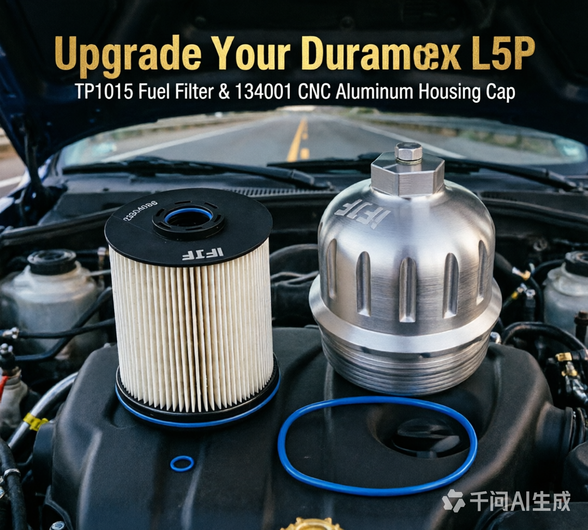
OEM L5P fuel filter cap cracking? GM TSB #18-NA-103 confirms it. Fix it permanently with iFJF's 6061-T6 billet aluminum cap — 4.7★ (360+ reviews), Amazon's Choice. Step-by-step DIY guide with torque specs, tools list & CP4 pump protection. Since 2019.
Published: June 6, 2026 | Last updated: July 17, 2026
If you own a 2017–2024 Chevy Silverado or GMC Sierra 2500HD/3500HD with the 6.6L L5P Duramax, you've probably heard the horror stories. Someone overtightens the factory fuel filter cap by a hair, the plastic cracks, and suddenly there's diesel spraying all over the engine bay — followed by a tow truck bill and a weekend ruined.
It's not just forum folklore. GM Technical Service Bulletin #18-NA-103 explicitly documents the factory 134001 plastic cap as a known failure point. And replacing it at the dealership costs $95–$130 for what's essentially the same fragile part.
There's a better way — one that over 360 L5P owners on Amazon have already chosen. Since June 2019, iFJF has been the original pioneer of the plastic-to-billet-aluminum conversion for the L5P fuel filter cap. Holding a 4.7★ rating, an Amazon's Choice badge, and a consistent Top 30 rank in Fuel Tank Caps, this upgrade has been imitated but never matched — and the reason comes down to one thing: relentless commitment to quality that's been proven across six years and hundreds of thousands of miles.
Here's what actually causes the failure — and how the original $53.99 billet aluminum upgrade, trusted since 2019, solves it permanently.
When iFJF launched the first 6061-T6 billet aluminum L5P fuel filter cap on June 13, 2019, there was nothing else like it on the market. At the time, every L5P owner faced the same grim choice: keep replacing fragile OEM plastic caps ($95–$130 each at the dealer) or gamble with cheap eBay knockoffs that often had thread pitch errors and leaked within months.
Six years later, the landscape has changed. Competitors have emerged — some copying the design, others undercutting on price with inferior 5052 aluminum or skipping the anodizing step entirely. But iFJF remains the benchmark, and the numbers tell the story:
| Metric | iFJF 134001 Cap |
|---|---|
| Amazon Rating | 4.7★ (361+ reviews) |
| Amazon Best Sellers Rank | #30 in Fuel Tank Caps |
| Amazon Badge | Amazon's Choice |
| Customer Questions Answered | 17 |
| On the Market Since | June 13, 2019 (6+ years) |
| Color Options | 5 (Black, Silver, Red, Gold, Green) |
| Material | CNC Billet 6061-T6 Aerospace-Grade Aluminum |
| Drain Plug | Upgraded Stainless Steel (rust-free, lifetime warranty) |
Being first to market isn't enough on its own. What keeps iFJF ahead — year after year, through waves of imitators — is consistency. Every cap is CNC-machined to the same tolerances that made the original a best-seller. Every anodized finish is inspected before shipping. And every drain plug is now upgraded to stainless steel — not aluminum — because six years of customer feedback taught us that rust-free durability at the drain point matters.
The 2017–2020 Duramax L5P uses a cartridge-style fuel filter housed inside a plastic cap (GM part #134001). To replace the filter, you unscrew the cap, swap the element and O-rings, and thread it back on.
Sounds simple. Here's where it goes wrong:
The factory cap is made of glass-filled nylon. Under the hood of an L5P, temperatures routinely swing from -20°F winter cold-starts to 220°F+ after towing heavy. Over thousands of heat cycles, nylon loses its ductility and becomes brittle. A cap that threaded on smoothly at 50,000 miles might crack during removal at 75,000.
The plastic cap has no mechanical stop. The factory torque spec is 18 ft-lbs (25 N·m), but most DIYers and even some shops "gutentight" it with a ratchet. Overtorque by even 5 ft-lbs, and micro-fractures form in the nylon. You won't see them — until diesel starts weeping past the seal 2,000 miles later.
The L5P's Bosch CP4.2 high-pressure fuel pump operates at up to 29,000 PSI (2,000 bar). It tolerates exactly zero water or contamination. A cracked cap introduces air into the system, causing cavitation inside the CP4.2 — and when a CP4.2 grenades, the repair bill starts at $4,000–$8,000 because metal fragments contaminate the entire fuel system (injectors, lines, rails, tank).
⚠️ The Stakes: A $20 plastic cap failure → air in fuel system → CP4.2 cavitation → $8,000 fuel system rebuild. This is the single most expensive cascade failure on the L5P platform, and it starts with a cracked filter cap.

The iFJF TP1015 kit replaces the failure-prone plastic cap with a CNC-machined 6061-T6 billet aluminum cap — the same aerospace alloy used in performance fuel rails and high-pressure fittings. Here's why it's a one-and-done upgrade:
| Failure Mode | OEM Plastic Cap | iFJF 6061-T6 Cap |
|---|---|---|
| Overtorque cracking | ❌ Fractures at >23 ft-lbs | ✅ Handles 40+ ft-lbs without deformation |
| Heat cycle embrittlement | ❌ Nylon becomes brittle over time | ✅ 6061-T6 rated to 400°F continuous |
| Chemical degradation | ❌ Nylon swells with biodiesel blends | ✅ Anodized finish — immune to diesel, B20, additives |
| Thread stripping | ❌ Cross-threads easily during reinstall | ✅ Precision CNC threads — smooth engagement every time |
🛒 Just need the cap? If you already have fresh filters, get the 6061-T6 Billet Aluminum Cap (fits 2017–2024 L5P) — standalone, no filter included.
The cap gets all the attention, but the TP1015 filter element is equally important. OEM ACDelco TP1015 filters use cellulose paper media rated at 7–10 microns nominal — meaning they catch particles at that size only some of the time. iFJF's element uses a multi-layer synthetic blend rated at 5 microns absolute, which means it catches 99.9% of particles ≥5μm, every pass.
Why does 2 microns matter? The CP4.2 pump's internal clearances are measured in single-digit microns. A 7μm particle that slips past a nominal-rated filter can score the pump bore. Over time, that scoring reduces pressure output until the CP4.2 can't maintain rail pressure — and the ECM throws P0087 (Fuel Rail Pressure Too Low).
Diesel fuel always contains some dissolved water, especially if you fill up at high-turnover stations or store fuel in bulk tanks. The L5P has no factory water-in-fuel (WIF) sensor downstream of the filter — the first warning you get is usually a dead CP4.2.
The iFJF TP1015 element includes a hydrophobic barrier layer that achieves 98% water separation efficiency. Water droplets coalesce on the barrier and settle at the bottom of the housing, where they can be drained through the integrated anodized aluminum drain plug during filter changes.
🛒 Already have the aluminum cap? Grab a replacement TP1015 filter element ($19.99) — rated at 5 microns absolute, 98% water separation.
Estimated time: 20–30 minutes | Difficulty: Beginner | Tools: 36mm socket, torque wrench, drain pan, clean diesel
The L5P fuel filter housing is mounted underneath the truck on the driver-side frame rail, just ahead of the fuel tank (between the DEF tank and fuel tank). You don't need to open the hood — access it from under the truck with a jack and jack stands. It's a black cylindrical cartridge housing with a 36mm hex-head cap on top of the bowl.
Place a drain pan under the housing. Using a flathead screwdriver, open the water drain valve at the bottom of the housing and let any accumulated water and diesel drain out. Close the valve when it's just pure diesel flowing.
Fit a 36mm socket onto the hex head and unscrew counterclockwise. It may be tight — the O-ring and pressure create a strong seal. Once loose, lift the cap straight up. The old filter element will come out with it (it clips onto a plastic stem molded into the cap).
⚠️ If the plastic cap cracks during removal: Congratulations, you've just confirmed why you're upgrading to aluminum. Remove any plastic fragments from the housing threads before proceeding.
Shine a flashlight into the housing. Look for:
If clean: proceed. If anything looks off: investigate before installing the new filter.
Turn the ignition to "ON" (do not start the engine). You'll hear the in-tank lift pump cycle for 15–30 seconds. Turn the key off, then repeat 3–5 times. This purges air from the filter housing and lines.
Start the engine. Let it idle for 2–3 minutes while you inspect the cap area for any fuel seepage. No drips? Torque the drain plug closed (finger-tight + 1/4 turn) and you're done.
| Normal Driving | Every 22,500 miles (per GM maintenance schedule) |
| Heavy Towing / Severe Duty | Every 15,000 miles |
| Frequent Idling / Cold Climate | Every 12,000–15,000 miles |
| Biodiesel (B5–B20) | Every 10,000 miles (biodiesel degrades filter media faster) |
Pro Tip: Always replace both O-rings with every filter change. Reusing old O-rings is the #1 cause of post-service fuel leaks. The iFJF kit includes two fresh Viton® O-rings, so there's no excuse.
The best part about the iFJF kit? You only buy the cap once. For all future filter changes, you just need the replacement filter element and O-rings. We sell filter-only refill kits starting at $19.99 — making every subsequent service cheaper than buying a new OEM plastic cap that you'll just have to replace again.
The cap is available in 5 anodized colors — Red, Gold, Green, Silver, and Black — so you can match (or contrast) your engine bay's aesthetic. The anodizing isn't just cosmetic; it provides a hard, corrosion-resistant surface that shrugs off diesel, road salt, and under-hood chemicals.
4.7 out of 5 stars across 361+ verified Amazon reviews — and counting. Here's what L5P owners are saying on Amazon, Duramax forums, and Facebook groups:
"Changed my filter at 45k and the factory cap cracked coming off. Ordered the iFJF aluminum cap and it's night and day — threads are buttery smooth, and I'm not scared to torque it properly now."
— 2018 Silverado 3500HD owner, DuramaxForum
"The red cap looks amazing against the black engine bay. More importantly, I swap filters twice a year for my hotshot rig and not worrying about cracking the cap is worth every penny."
— 2019 GMC Sierra 2500HD owner, Hotshot driver
"Been running this cap since 2019. Three filter changes later, threads still engage like new. Imitators have come and gone, but the original iFJF cap just works."
— 2017 Silverado 2500HD owner, Amazon Verified Purchase (4.7★ review)
⭐ 4.7/5 | 📍 #30 in Fuel Tank Caps | 🏆 Amazon's Choice | 📅 On Amazon since June 2019
No. Under the Magnuson-Moss Warranty Act, manufacturers cannot void your warranty for using aftermarket parts or performing your own maintenance, as long as the parts meet OEM specifications. The iFJF TP1015 meets or exceeds all GM filtration standards. Just keep your receipts and log the service date/mileage.
The CP4.2 pump relies on fuel for lubrication and cooling. Running it dry — even for a few seconds during startup — can score the internal cam and rollers. Once scored, the pump begins producing metal debris that circulates through the entire fuel system. The repair involves replacing: CP4.2 pump ($2,500), all 8 injectors ($3,200), high-pressure lines and rails ($1,500), and flushing the fuel tank. Total: $7,000–$10,000. Prime your filter. Seriously.
The iFJF cap's drain plug uses an anodized aluminum plug with a captive Viton® seal. Under normal use, the drain plug O-ring should last 5+ filter changes. Inspect it each time — if it looks flattened, cracked, or hardened, email us for a free replacement.
No. GM redesigned the L5P fuel filter housing for the 2021 model year refresh. This kit is specifically for 2017–2020 L5P trucks. For 2021+ applications, contact us or check our store for the updated kit.
Since June 2019, iFJF has been the benchmark for L5P fuel filter cap upgrades. The math hasn't changed:
You're paying less for a part that eliminates the #1 failure point on the L5P fuel system — one that's been proven across six years, 361+ reviews, and a 4.7★ rating. If you do your own filter changes, you'll save money on the very first service. If a shop does them, you'll stop paying for replacement plastic caps every time.
Imitators have come and gone. But the cap that started it all in 2019? It's still the one L5P owners trust most.
Ready to bulletproof your L5P's fuel system?
🛒 Shop the TP1015 Kit — $69.99
Disclaimer: This article contains technical guidance for informational purposes. Always consult your vehicle's service manual and follow all safety precautions when performing maintenance. If you're unsure about any step, consult a qualified diesel technician.
Ready to fix that fuel system? Shop our tested Duramax L5P upgrade parts below:
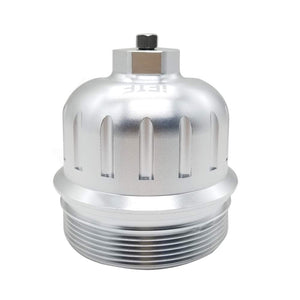 134001 Fuel Filter Housing Cap for 6.6L Duramax L5P 2017-2023 | iFJF
$69.99
134001 Fuel Filter Housing Cap for 6.6L Duramax L5P 2017-2023 | iFJF
$69.99
 Fuel Filter Assembly for 1992-2002 Chevy GMC 6.5L Diesel — Suburban Tahoe Silverado Sierra Yukon Hummer H1 — Replaces 10226035
$177.99
Fuel Filter Assembly for 1992-2002 Chevy GMC 6.5L Diesel — Suburban Tahoe Silverado Sierra Yukon Hummer H1 — Replaces 10226035
$177.99
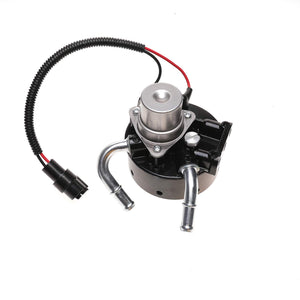 12642623 Fuel Filter Head + 1R-0750 Refit for 2005-2016 Duramax 6.6L
$87.99
12642623 Fuel Filter Head + 1R-0750 Refit for 2005-2016 Duramax 6.6L
$87.99
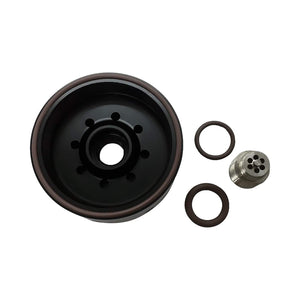 1R-0750 Fuel Filter Aluminum Head for 2001-2016 Duramax 6.6L LB7-LML
$63.99
1R-0750 Fuel Filter Aluminum Head for 2001-2016 Duramax 6.6L LB7-LML
$63.99


